Designing the Intelligence Layer of a Bootstrapped SEO SaaS
This project was developed under a Non-Disclosure Agreement (NDA). To protect intellectual property and client data, all sensitive information, brand names, and visual identities have been altered or anonymized. The structure and UX logic remain faithful to the original project.
Challenge
A bootstrapped, profitable SEO SaaS founded in 2023 in Lisbon, operating across PT, ES, and EN markets. Goal: reduce marketing teams' operational costs by up to 70% through AI automation.
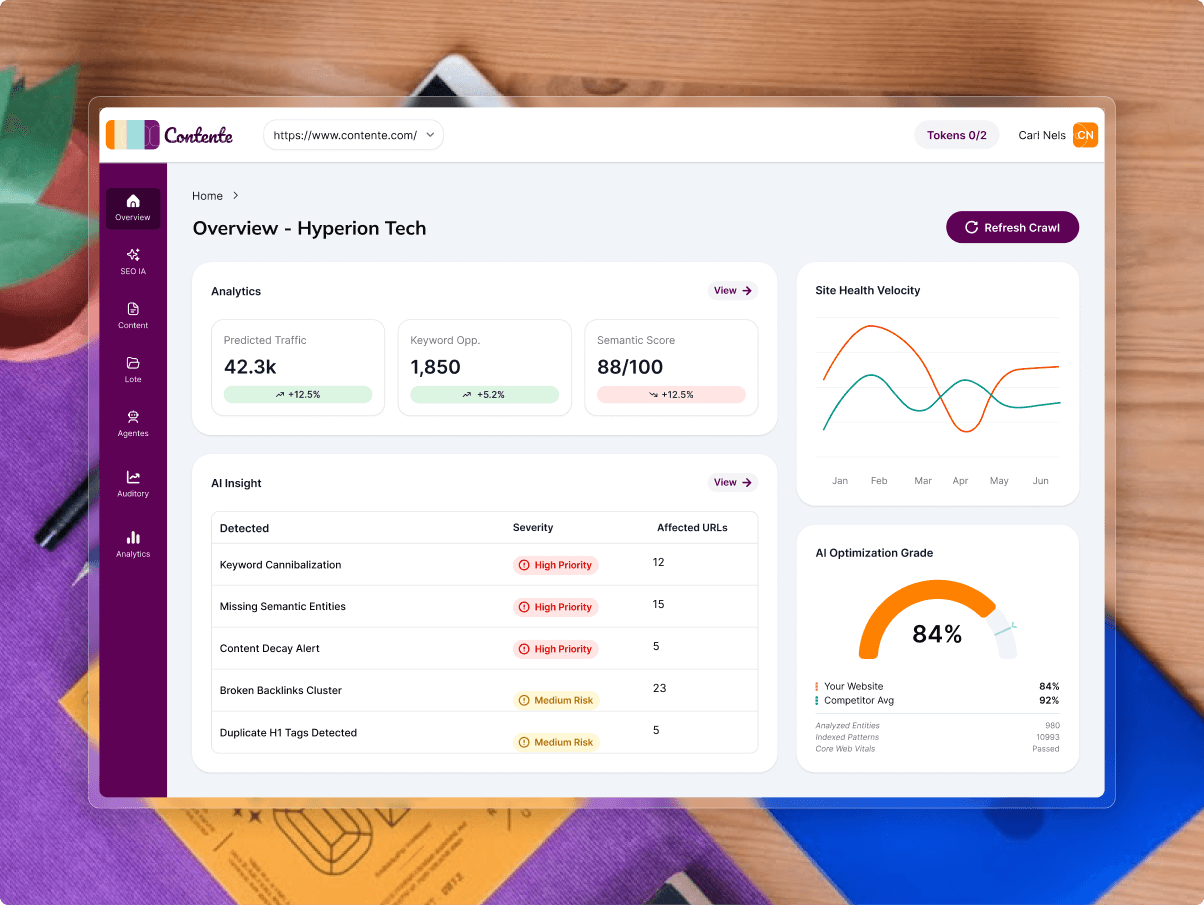
- Powerful analysis, unusable output: The platform had a working Topical Authority engine for mapping content gaps across a website. The output was raw data tables and dense keyword lists that required hours of manual work before an agency could share anything with a client.
- The bottleneck was operational, not strategic: Users knew what to do. The problem was everything between the data and the deliverable: reformatting exports, building calendars in spreadsheets, and turning internal-looking reports into something client-ready.
- The UI was blocking the value proposition: The platform promised to help teams scale content production without growing headcount. That promise could not be felt through the existing interface.
Process
I was the Product Designer responsible for end-to-end UX/UI, from workflow mapping to handoff-ready prototypes in Figma using the Shadcn UI component framework.
- Competitive benchmarking: Mapped the SEO tools landscape, from Semrush and Ahrefs to emerging AI-native players, to find where there was room to differentiate through simplicity.
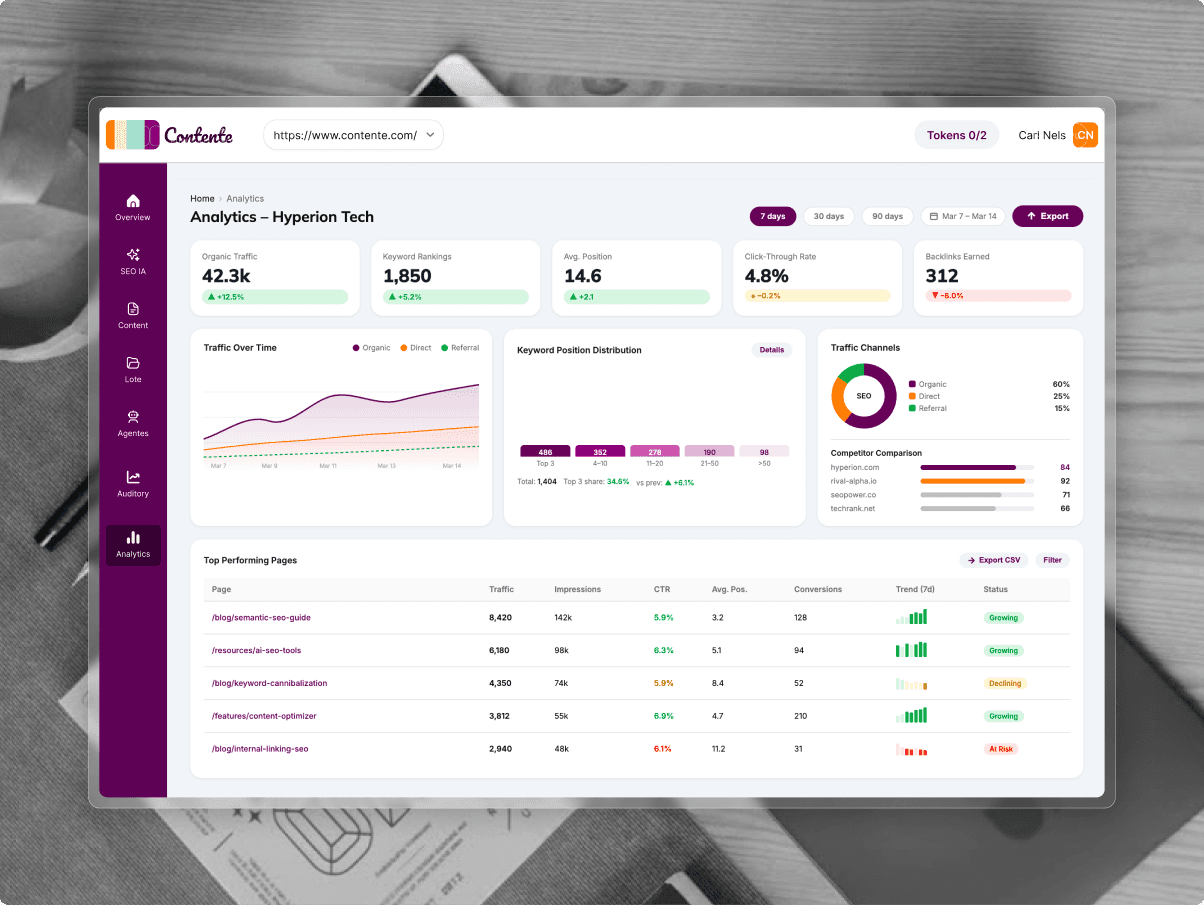
- Two-phase workflow split: Divided the product into Strategy (what to create and why) and Execution (producing at scale). Each phase has different mental models and decision types, and the interface reflects that separation.
- Authority Map design: Designed a visual heatmap of content coverage by topic so users can understand a website's SEO health in under 30 seconds instead of reading through exported tables.
- Calendar automation flow: Designed the interaction for generating a 3-month content calendar from the Authority Map output, replacing a multi-day manual process.
Solution
Four features that replaced external tools and manual steps.
- Authority Map: A visual heatmap showing which topic areas of a website are strong, thin, or missing. Turns raw keyword data into a prioritized diagnosis.
- 3-Month Content Calendar: Converts the Authority Map into a ready-to-share editorial calendar. What used to take days of planning now takes minutes.
- Smart Production Filters: Separates New Content opportunities from Optimization opportunities so teams know exactly what to work on next.
- Brand Guide: Keeps all AI-generated briefs consistent with the client's tone of voice, which matters especially for agencies managing multiple brands.
Results
Launched with plans from €49/mo (Solo) to €229/mo (Scale), serving freelancers to enterprise marketing teams across three languages.
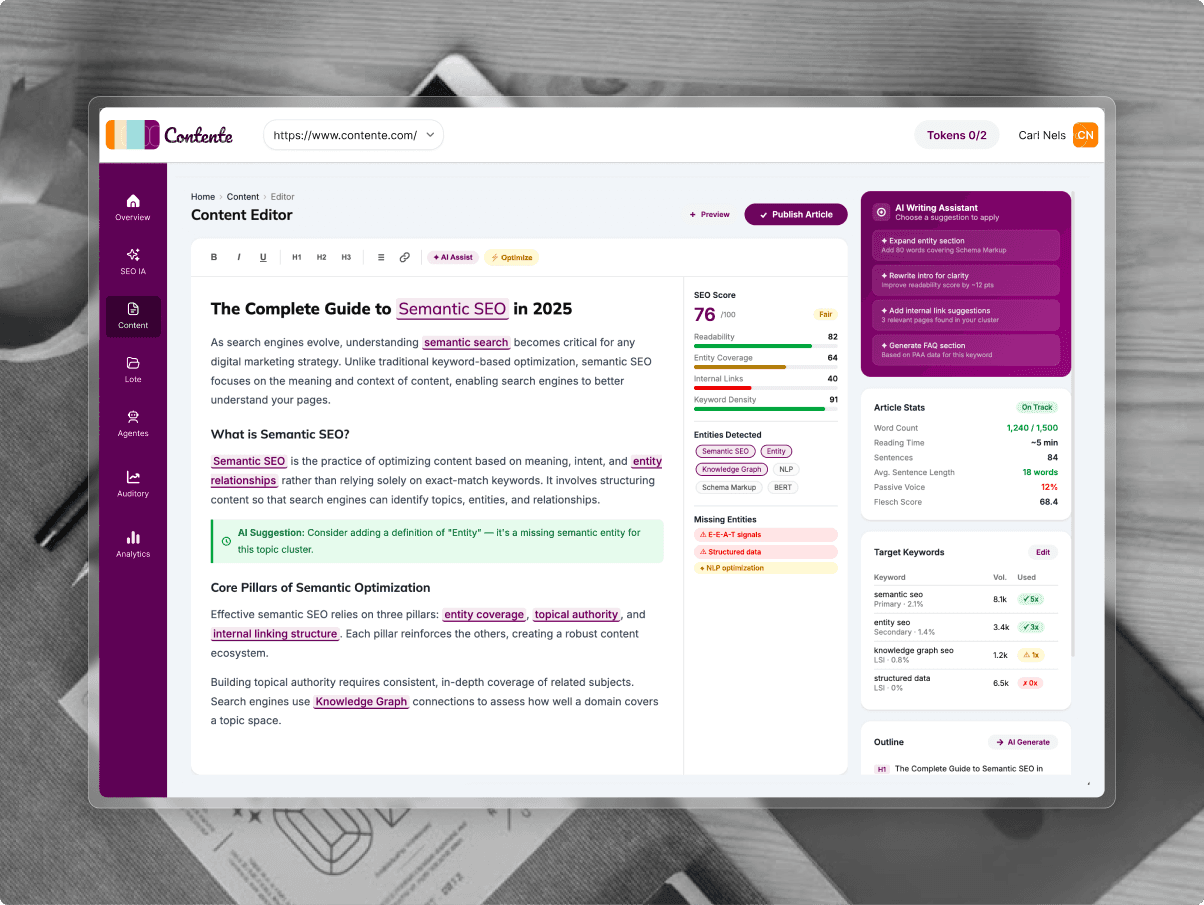
- Days of work down to one session: Content audits, calendar planning, and gap identification became automated. Tasks that took days now fit in a single working session.
- Up to 70% reduction in operational costs: Replacing fragmented toolchains and manual reporting with a unified platform is the product's stated goal, and the design made it achievable.
- Bootstrapped and profitable since 2023: The company reached profitability without external funding, confirming real product-market fit.
- Shipped across PT, ES, and EN simultaneously: The component architecture and design system supported a clean handoff for development teams shipping in three languages at once.